September 2, 2021 at 12:00 pm
Developing Faculty for the Future of Health Professions Education
Presenter: Teresa Chan, HBSc, BEd, MD, FRCPC, MHPE, DRCPSC
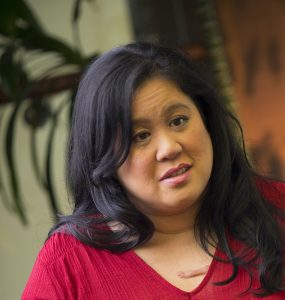 Dr. Teresa Chan is an associate professor and Associate Dean of Continuing Professional Development at McMaster University. Dr. Chan is very well known for her scholarship in faculty development and online education research. She is one of the founding members of the METRIQ Study group. She is the Chief Strategic Officer for the CanadiEM digital community of practice. She is a Senior Advisor of the international Faculty Incubator program for the Academic Life in Emergency Medicine (ALiEM) group. For ALiEM, she has also served on their Editorial Board and was a lead of the Medical Education in Cases Series (www.aliem.com/medic). Dr. Chan is also interested in developing medical education innovations (and evaluating them!). For instance, she has co-developed and is evaluating a serious game about emergency department flow called GridlockED (www.gridlockedgame.com)!
What does the future of medical education look like? Join Dr. Teresa Chan in an interactive digital workshop to think through what the near future of medical education might look like.
Objectives:
By the end of this session, participants will be able to:
– identify some hard and soft trends in the future of medical education;
– name one area of interest they’d like to explore;
– find an accountability buddy to set a goal for their own future development.
Seminar Downloads
Seminar Archive
September 9, 2021 at 12:00 pm
Creating Learning Entities: Augmentation in health professions education
Presenter: Rachel Ellaway, PhD
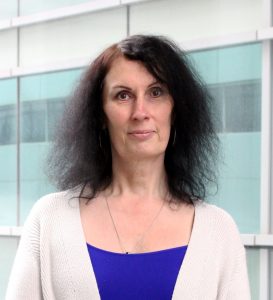 Professor Rachel Ellaway is a renowned scholar and thinker in the field of health professional education. She received her PhD from the University of Edinburgh, and she moved to Canada in 2007 to join the newly opened Northern Ontario School of Medicine. In 2015 she joined the University of Calgary as the Director of the Office of Health and Medical Education Scholarship. She ran the AMEE Fringe for many years and is currently the Editor in Chief of the journal Advances in Health Sciences Education. Dr. Ellaway’s research and leadership in academic medicine has had a deep impact on thinking and practice around the world. A thought leader, innovator, and philosopher in medical education, she has developed many new ideas, frameworks, tools, and methods in support of learning, teaching, and assessment. With more than 200 academic publications and more than 100 invited presentations, Dr. Ellaway is a major voice in the field. Her many awards reflect the significance of her work, not least in leading and modeling new approaches to training tomorrow’s health professionals.
Almost everything we do in teaching and assessing health professionals involves adding to and subtracting from their opportunities. Dr Ellaway will use augmentation as a lens to consider the practices and philosophies of health professions education, and she will explore the different kinds of learning entities that are created as a result.
Seminar Downloads
Seminar Archive
September 16, 2021 at 12:00 pm
Reminders, Refocusing and Rethinking: Med Ed after COVID
Presenter: Andrew Binks, PhD and Adam Weinstein, MD
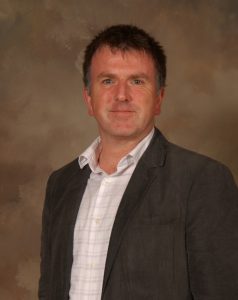 Andrew Binks has taught medical physiology for over two decades. His interest in innovative, active learning strategies has led him to give development workshops and keynote presentations at national and international levels. His evidence-based approach to medical education has allowed him to transfer his basic science research experience to study the impact of innovations in classroom and curricular design. Recently, this led him to spear-head a multi-institutional report on the impact of COVID-19 on medical education and postulate on its future ramifications.
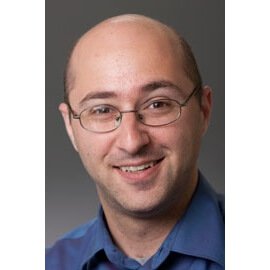 Dr. Adam Weinstein recently joined the faculty at Netter School of Medicine as an Associate Professor of Medical Sciences and Pediatrics to assist in directing the Clinical Arts and Sciences course and direct the Medical Student Home program. He worked at Geisel School of Medicine at Dartmouth for 12 years, serving as section chief of Pediatric Nephrology, director of Pediatric Medical Student Education, director of the Problem Based Learning curriculum, co-director of On Doctoring, and chair of the Medical Education Committee.
Drs. Binks and Weinstein will share their perspectives, providing examples of how medical education changed abruptly with the COVID-19 pandemic, emphasizing what changes may have some lasting benefit.
Seminar Downloads
Seminar Archive
September 23, 2021 at 12:00 pm
Hybrid Health Care Education: Rethinking student support and innovating for the future
Presenter: Kendra Gagnon, PT, PhD
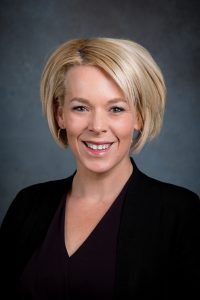 Kendra Gagnon, PT, PhD, is Clinical Professor and Chair of the Department of Physical Therapy at Baylor University, which is home to one of the first fully hybrid Doctor of Physical Therapy (DPT) programs in the United States. She has been a physical therapist educator since 2005, teaching in both entry-level and post-professional programs in online, residential, and hybrid environments. As a founding faculty member in the Baylor DPT program, she has played a key role in developing strategies for keeping learners connected and providing student support in both virtual and face-to-face settings. Her scholarly interests focus on educational research, and her recently disseminated work includes exploration of experiential learning in pediatric physical therapist education, use of social media in health care education and practice, and recommended practices in hybrid DPT education.
What is the role of distance learning in health care education? How does online learning impact the development of professional skills? Can new technologies make health care education faster, less expensive, and more accessible to a diverse population of future health professionals, without sacrificing quality and connection? This session will address those questions and more, presenting innovative strategies for humanizing online learning, building community, and providing support for learners in a hybrid health education program. Rooted in current evidence on best practices in online and hybrid teaching and learning, this session will explore challenges and reveal opportunities for leveraging technology to promote diversity, professional development, leadership, and resilience in today’s students.
Seminar Downloads
Seminar Archive
September 30, 2021 at 12:00 pm
How COVID-19 Transformed Online Teaching and Learning: Or did it?
Presenter: Jonathan Wisco, PhD, Jaya Yodh, PhD, Olivia Coiado, PhD, and Luke Read
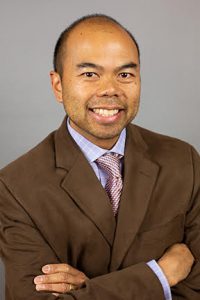 Dr. Wisco earned his B.S. in Biology at the University of Washington, Seattle, WA in 2004, and Ph.D. in Anatomy and Neurobiology from the Boston University School of Medicine (BUSM) in 2003. He completed postdoctoral work in Radiology at the Athinoula A. Martinos Center for Biomedical Imaging and Massachusetts General Hospital, Cambridge, MA in 2006. He was an Assistant and an Associate Professor of Integrative Anatomy at the David Geffen School of Medicine, Department of Pathology and Laboratory Medicine, University of California, Los Angeles (UCLA) until 2012. Most recently, Dr. Wisco returned to BUSM from Brigham Young University, Provo, UT, where he was Associate Professor and Director of the Laboratory for Translational Anatomy of Degenerative Diseases and Developmental Disorders, College of Life Sciences, Department of Physiology and Developmental Biology, and Neuroscience Center. He was also Associate Director of the BYU MRI Research Facility. Dr. Wisco also held an Adjunct Associate Professor position in the Department of Neurobiology and Anatomy at the University of Utah School of Medicine, Salt Lake City, UT.
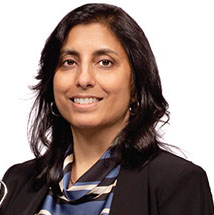 Jaya Yodh, PhD is a Teaching Associate Professor in the Department of Biomedical and Translational Sciences at Carle Illinois College of Medicine (Carle Illinois), an engineering-integrated medical school at the University of Illinois at Urbana-Champaign (UIUC). She has 23 years of professional expertise encompassing medical education in settings of both traditional and integrated curricula along with interdisciplinary teaching and research bridging biomedical and quantitative sciences. At Carle Illinois, Dr. Yodh holds multiple educational roles as a Medical Education Problem-Based Learning (PBL) Facilitator, Biochemistry Thread Director, and Director of the USMLE Step 1 Review course. Her current medical educational and research interests focus on integration of the basic sciences within systems-based curricula, innovations in PBL, and USMLE Step 1 preparation. Prior to joining Carle Illinois, Dr. Yodh held positions on the Biochemistry Faculty at Midwestern University, AZCOM in Glendale, Arizona from 1997-2006 where she taught students in the Doctor of Osteopathic Medicine, Physician Assistant, and Biomedical Sciences programs, and then at the UIUC Department of Physics until 2017 serving in dual roles as Research Faculty and Director of Education and Outreach for an NSF Physics Frontiers Center where she directed research-based courses in biological physics. Her research has led to publications on Med-Ed innovations and genome maintenance and chromatin dynamics using single-molecule biophysics tools.
Olivia Coiado, PhD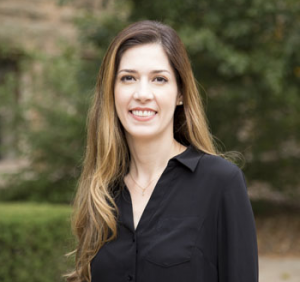
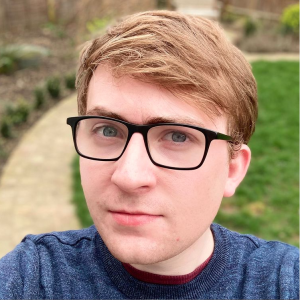 I am a senior medical student at Norwich Medical School in the UK. Currently, I am undertaking a master’s degree in Clinical Education before I begin my final year of medical school in September. This year I have worked to reduce OSCE-associated stress among first-year MBBS students, and I am conducting a systematic review to evaluate the impact of near-peer teaching among senior medical students. I have a keen interest in medical education and have led or facilitated a range of educational events during the pandemic and subsequent lockdowns including working as a PBL facilitator. This experience has provided several insights into online learning, especially with undergraduate medical students. Therefore, when Coiado et al. shared their article on online PBL I felt qualified to reply and share my experiences.
This session explores the impact the COVID-19 pandemic has had on the health professional learning space as it transitioned from in-person to online and/or hybrid interactions between teachers and learners. The panel of presenters, representing a diverse set of institutions, disciplines, faculty, and student perspectives, will share their experiences and lessons learned during the past year to inform teaching and learning best practices in PBL, basic science, and clinical instruction. Some of the outcomes may be surprising and will highlight how we’ve evolved as educators and students.
Seminar Downloads